
Two Worlds, One Conversation
You watch your grandchildren glued to their phones.
They’re scrolling through something called TikTok. They’re texting multiple friends at once. They’re taking photos of their food before they eat it.
And you think: What happened to just… living?
Meanwhile, your grandchildren look at you and wonder: How did Grandma live without Google? How did she find anything?
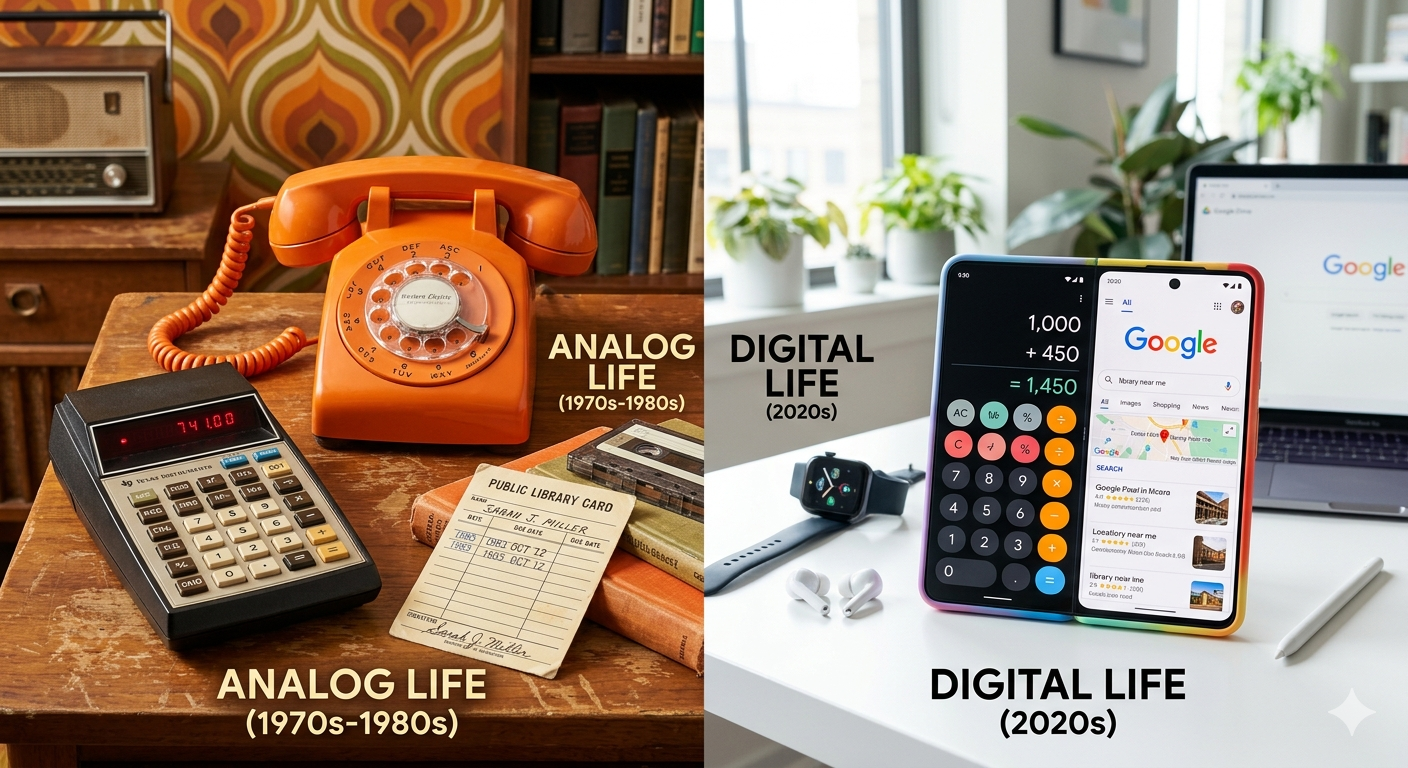
You grew up in completely different worlds. You grew up analog. They grew up digital.
And sometimes it feels like you’re speaking different languages.
Here’s what I want you to know: AI can help you bridge that gap. It can help you understand their world. And it can help you share yours.
The Two Worlds
Your World: The Analog Age
You grew up in the 1950s, 60s, 70s, or 80s. A time when:
- There were no cell phones. If you wanted to talk to a friend, you called their house phone and hoped they were home.
- There was no internet. If you needed information, you went to the library.
- Photos were precious. You had one roll of 24 photos. You chose your shots carefully.
- Entertainment came from three TV channels. Everyone watched the same shows at the same time.
- Boredom was normal. You had to invent your own entertainment.
- You played outside until the streetlights came on. That was your curfew.
You are the only generation in history to have lived a fully analog childhood and a fully digital adulthood. No generation before you had to make that leap. No generation after you will ever cross that bridge.
Their World: The Digital Age
Your grandchildren grew up in the 2000s, 2010s, or 2020s. A time when:
- Phones are computers. They carry the world’s information in their pocket.
- Everything is instant. Answers, communication, entertainment — all immediately available.
- Social media is essential. 66% of Gen Z say it’s essential to their daily routine.
- There’s endless content. Netflix, YouTube, TikTok — unlimited entertainment.
- They’ve never been bored. There’s always something to watch or do.
- Their childhood is documented digitally. Every moment is photographed and saved.
They are digital natives. They’ve never known a world without screens.
Why This Gap Matters
The gap isn’t just about technology. It’s about:
- How you form relationships (in-person vs. online)
- How you get information (library vs. Google)
- How you entertain yourselves (creating vs. consuming)
- How you remember things (photo albums vs. cloud storage)
When you don’t understand each other’s worlds, you miss opportunities to connect.
But here’s the truth: both worlds have value. And AI can help you appreciate both.
How to Use AI to Understand Their Digital Lives
Step 1: Ask AI to Explain What They’re Doing
Your grandson keeps talking about TikTok. You have no idea what it means.
Ask AI:
“My 16-year-old grandson spends hours on TikTok. I don’t understand what it is or why it’s so appealing. Can you explain it to me?”
What AI will tell you:
TikTok is a video app where people create and watch short videos. It’s like a personalized variety show. For teenagers, it’s a creative outlet, a social space, and entertainment all in one.
Step 2: Ask AI Why Their Behavior Makes Sense
Your grandson won’t answer phone calls but will text for hours.
Ask AI:
“Why do teenagers prefer texting over phone calls?”
What AI will tell you:
Texting gives them control. They can think before responding, manage multiple conversations, and respond when it’s convenient. Phone calls feel intrusive to them. It’s not rudeness — it’s a different communication style.
Step 3: Ask AI How to Connect on Their Terms
Ask AI:
“How can I connect with my teenage grandchildren in ways that feel natural to them?”
What AI will suggest:
- Text them memes or funny videos
- Ask about their interests on their platforms
- Share things digitally
- Play their games with them
- Ask them to teach you something
How to Use AI to Share Your Analog Experiences
Your grandchildren genuinely cannot imagine life without the internet. AI can help you explain your world in ways they’ll understand.
Step 1: Translate Your Experiences
Ask AI:
“I want to explain to my 14-year-old grandson what it was like growing up without the internet in the 1970s. How can I describe it in a way he’ll relate to?”
What AI will help you say:
“Imagine your phone died for a week. No texting, no Google, no YouTube, no GPS. That’s how we lived all the time.
If you wanted to see a friend, you’d bike to their house and hope they were home. If you wanted to know something, you’d go to the library. If you wanted entertainment, you’d invent your own games.
It sounds hard. But it also meant we were really present. We weren’t distracted by notifications. We lived in the moment because that’s all we had.”
Step 2: Tell Stories AI Can Help You Frame
Ask AI:
“I want to tell my grandchildren about waiting weeks for a letter from a pen pal. How can I make this story compelling to kids used to instant messaging?”
What AI will help you create:
A story framed around anticipation and excitement — how waiting made each letter feel precious, like a gift.
Try This This Week: Have a “Two Worlds” Conversation
Step 1: Pick one aspect of your childhood your grandchildren don’t understand.
Step 2: Ask AI to help you explain it:
“I want to tell my grandchildren about [topic]. How can I explain what it was like in the 1970s in a way they’ll find interesting?”
Step 3: Ask your grandchildren to explain something they do that confuses you.
Step 4: Find the common ground. Ask AI:
“What are the similarities between [your analog experience] and [their digital experience]?”
Step 5: Share what you learned with each other.
Real Prompts You Can Use Right Now
Understanding Their World
“My grandson is always gaming with his friends online. I don’t understand why. Can you explain the appeal of online gaming for teenagers?”
“My granddaughter takes photos of everything before posting. Help me understand what social media means to her generation.”
Sharing Your World
“I want to tell my grandchildren what it was like to plan a trip without GPS or smartphones. How can I make this story engaging?”
“Help me explain why we used to memorize phone numbers and why that mattered.”
Finding Common Ground
“What are the similarities between pen pals in the 1970s and online friendships in 2026?”
“What do teenagers in 2026 and teenagers in the 1970s have in common?”
The Surprising Truth
Here’s what you might discover: Your grandchildren aren’t that different from you.
They want to belong, express themselves, connect with friends, and feel valued. The tools are different. But the needs are the same.
And when you understand their digital world — and they understand your analog world — you realize:
You’re not from different planets. You’re from different chapters of the same story.
A Special Note
Young people are actually seeking out analog experiences right now.
They’re buying vinyl records. Learning to knit. Writing letters by hand. Playing board games.
Why? Because “so little of their life feels tangible.”
Your analog childhood isn’t outdated. It’s becoming valuable again.
Why This Matters
Understanding each other across generations isn’t just nice. It’s essential.
When you understand their world, you worry less and stay connected. When they understand yours, they gain perspective on what really matters.
AI can’t replace real conversation. But it can help you have better conversations.
Next time: We’ll explore how to use AI to document your family history so future generations can know where they came from.
— The Silver Assistant






Leave a Reply